DKFL Industrial Oil Seal
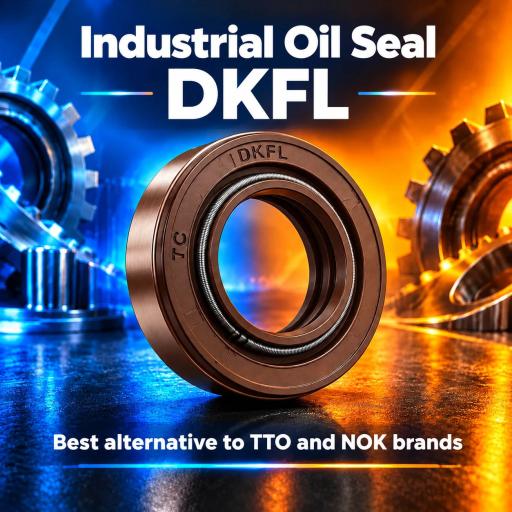
DKFL Industrial Oil Seals
The Ultimate Alternative to NOK & TTO
End Confusion Over Counterfeits and Unreliable Market Quality
A dependable, cost-effective, and durable sealing solution engineered to protect electric motors, gearboxes, pumps, and rotary industrial equipment.
What Is an Oil Seal and Why Does Machine Reliability Depend on It?
In every production line, plant, or workshop, machinery operates continuously under high rotational speeds. Gearboxes, electric motors, industrial pumps, and bearing units rely on high volumes of lubricating oils and greases to ensure smooth operation and prevent overheating. In this setup, an Oil Seal (Rotary Shaft Seal) serves as the critical defense barrier performing two vital missions:
- Preventing Lubricant Leakage: Seals in oil and grease so that gear sets and bearings never run dry, preventing catastrophic friction failures.
- Shielding Against Dust and Moisture: Acts as an impermeable barrier against airborne dust, metal shavings, process debris, water, and humidity.
Historically, industrial buyers have faced difficult trade-offs: prominent premium brands such as NOK (Japan) carry high counterfeit risks in open markets, while widely available alternatives like TTO (Taiwan) have frequently presented quality inconsistencies, market clones, and unclear grade tiers—triggering unplanned maintenance cycles. DKFL bridges this exact gap by delivering verified engineering consistency, long-lasting sealing durability, and guaranteed product integrity.
Although an oil seal typically represents less than 1% of the total machinery value, a seal failure can burn out an electric motor, shatter expensive bearings, or halt an entire production line in minutes. Choosing a high-grade oil seal is therefore a strategic investment in plant uptime.
Current Market Challenges: The Dilemma Between Overpriced Clones & Inconsistent Quality
Procurement managers and maintenance engineers frequently encounter two frustrating scenarios in the industrial market:
Trap 1: The Counterfeit Premium Risk (e.g., NOK Japan)
Top Japanese brands deliver exceptional performance, yet the market is heavily flooded with sophisticated counterfeit packaging and replicas.
- Virtually impossible to distinguish authentic units from clones with the naked eye
- Paying premium prices to intermediaries without traceable origin or authenticity documentation
- Premature failure and machine damage caused by installing fake seals sold under reputable names
Trap 2: Common Market Inconsistencies (e.g., TTO Taiwan)
While TTO has been a staple off-the-shelf option, modern procurement faces substantial hidden costs:
- Widespread circulation of copied parts making verified factory-original sourcing difficult
- Accelerated lip hardening, embrittlement in hot oil, and garter spring tension loss
- Uneven lip abrasion causing deep grooving and irreversible wear on expensive shaft surfaces
- Repeated unplanned shutdowns for seal replacement, wasting labor and production time
How to Calculate the Real Cost of an Oil Seal
Many procurement decisions are based solely on initial unit price. In reality, total operational seal cost is calculated as follows:
When relying on seals with uncertain origin or inconsistent elastomer compounds, marginal upfront savings evaporate after the first leak. Rebuilding gearboxes, changing contaminated oils, and halting production lines far exceed the component value. A precision DKFL seal ensures months of uninterrupted, leak-free performance.
Why DKFL Is the Smart, Modern Alternative
DKFL was created to resolve these industry challenges: delivering strictly controlled manufacturing standards and dependable sealing without counterfeit risks. Key advantages include:
1. Verified, Authentic Origin
Eliminate concerns over fake repackaging or generic knockoffs. You receive genuine, strictly inspected industrial components directly backed by verified quality control.
2. Resilient Virgin Elastomers
Sealing lips are molded from premium virgin compounds that preserve flexibility under hot lubricants and thermal cycling rather than turning brittle.
3. Calibrated Garter Springs
Corrosion-resistant internal garter springs maintain uniform, calibrated radial load across dynamic shaft revolutions without excessive friction bite.
4. Shaft Surface Protection
Optimized lip geometry and balanced friction characteristics prevent scoring and premature wear on mating shafts, extending shaft working life.
Material Selection Guide: Which Compound Fits Your Application?
Two primary elastomer formulations cover the vast majority of industrial applications:
• Standard Oil-Resistant Nitrile (NBR / Buna-N):
The standard industrial benchmark for general machinery, automotive, and shop operations. Designed for standard mineral oils, greases, and operating temperatures up to 100°C–120°C. Highly cost-effective and dependable under standard loads.
• High-Temperature & Chemical Fluoroelastomer (FKM / Viton):
Engineered for high-heat conditions, severe shaft speeds, or direct exposure to synthetic lubricants, fuels, and aggressive chemicals. Viton seals retain mechanical elasticity up to 200°C+ without thermal hardening or chemical breakdown.
4 Golden Installation Rules to Maximize Seal Service Life
Even the finest oil seal will leak prematurely if incorrectly installed. Follow these four basic rules for long service life:
- Clean the Shaft and Bore Thoroughly: Remove burrs, rust, old seal sealant, and dirt particles from both the shaft running track and the housing bore before installation.
- Always Pre-Lubricate the Lip (Never Install Dry): Apply a light coat of clean system oil or grease to the sealing lip. This prevents dry running friction and burn marks during startup.
- Avoid Direct Hammer Strikes: Off-center hammering can dislodge the internal garter spring or deform the outer metal casing. Always use a proper press tool, mandrel, or flat wooden block for square seating.
- Ensure Correct Orientation: The primary sealing lip and the garter spring pocket must always face the fluid medium being contained (towards the oil or grease reservoir).
Summary for Maintenance & Procurement Engineers:
An oil seal is an inexpensive component performing a mission-critical role. Switching to DKFL frees your plant from the risks of counterfeit NOK parts and inconsistent quality in the market. Protect your shaft surfaces, eliminate oil leaks, and maintain high plant productivity with confidence.
Technical Inquiry, Size Inquiries & DKFL Supply
Our technical team at Kamyar Gostar Iranian (KGICO) is ready to help you select the exact dimension, profile, and elastomer material for your specific operating conditions.
Download Catalog & Request Quote