

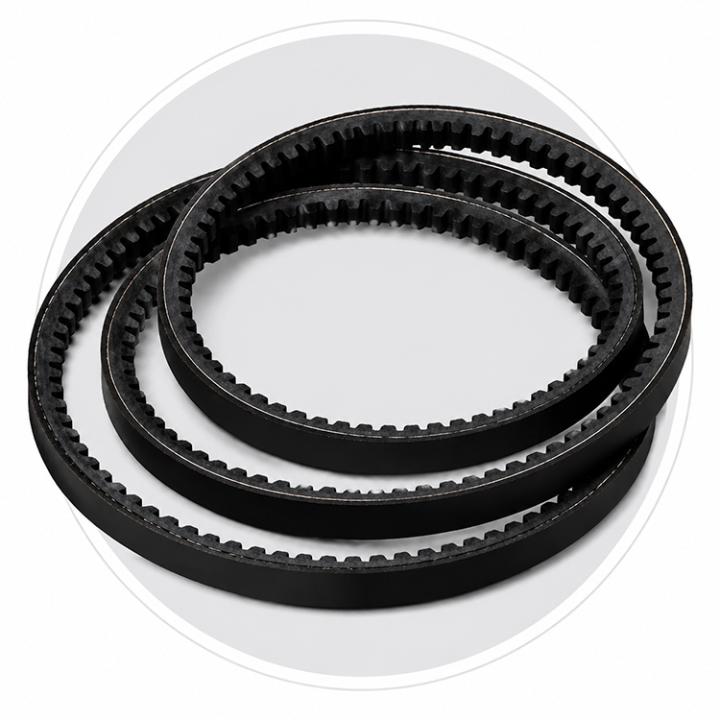
Belts
Belts
categories
Loading...
No products found
Comprehensive Engineering Guide to Industrial Belts: Structural Analysis, Power Transmission, and Material Selection
In mechanical power transmission systems, industrial belts serve as critical flexible intermediaries. They play a vital role in damping vibrations, absorbing load shocks, and transmitting torque between non-collinear shafts. Unlike rigid gear drives, belts offer controlled slip and vibration isolation, which significantly extends the operational life of bearings and primary prime movers. Conversely, improper profile selection, unsuitable material chemistry, or incorrect pre-tensioning can lead to catastrophic slip, thermal runaway, and significant energy loss in production lines.
This technical paper, provided by the Kamyar Gostar Iranian Industrial Group (DKFL) technical knowledge center, provides an engineering-grade overview of belt types, structural distinctions, and international design standards (ISO/DIN).
1. Classification of Power Transmission Belts
Industrial belts are categorized based on their operational mechanism and structural composition:
| Belt Type | Transmission Mechanism | Key Characteristic | Industrial Application |
|---|---|---|---|
| V-Belts | Frictional (Wedging) | High pulley stability | Compressors, Pumps, Machinery |
| Timing Belts | Positive Drive (Tooth-mesh) | Precision (Zero-slip) | CNC, Conveyors, Automation |
| Flat Belts | Frictional | Ultra-high speed | Turbines, Textile machinery |
2. Engineering Analysis of V-Belts
Due to their trapezoidal cross-section, V-belts utilize high normal forces within the pulley groove to transmit torque efficiently. Primary classifications include:
- Classic V-Belts: Profiles Z, A, B, C, D per DIN 2215. Ideal for general industrial drives with fluctuating loads.
- Raw Edge Cogged: Feature transverse notches in the underside, increasing flexibility and allowing for tighter pulley diameters without fatigue.
- Wrapped / Banded Belts: Multiple V-belts joined by a single backing layer; critical for preventing whip and turnover in heavy-duty shock-load environments.
3. Timing Belts: Precision in Motion
Synchronous timing belts rely on the mechanical engagement of teeth with pulley grooves, effectively eliminating slip. Core structural components include:
- Polymer Body: Neoprene or Polyurethane (PU) to provide resistance against oil, chemicals, and abrasion.
- Tensile Members: Steel or Aramid (Kevlar) cords designed to maintain dimensional stability and prevent elongation under peak load.
- Tooth Facing: High-wear-resistant nylon fabric facing, protecting the teeth from shear forces during engagement.
4. Installation Best Practices
5. Engineering FAQs
What is the difference between Wrapped and Raw Edge belts?
Wrapped belts feature a protective outer jacket for enhanced environmental durability. Raw Edge belts possess higher coefficients of friction and superior flexibility, making them optimal for high-speed drives with smaller pulley diameters.
When is a belt considered "End-of-Life"?
Indicators include transverse cracking, delamination, flank deformation, excessive hardening due to thermal exposure, or persistent high-pitched squealing that remains after proper tension adjustment. These symptoms necessitate immediate replacement to prevent secondary bearing failure.