

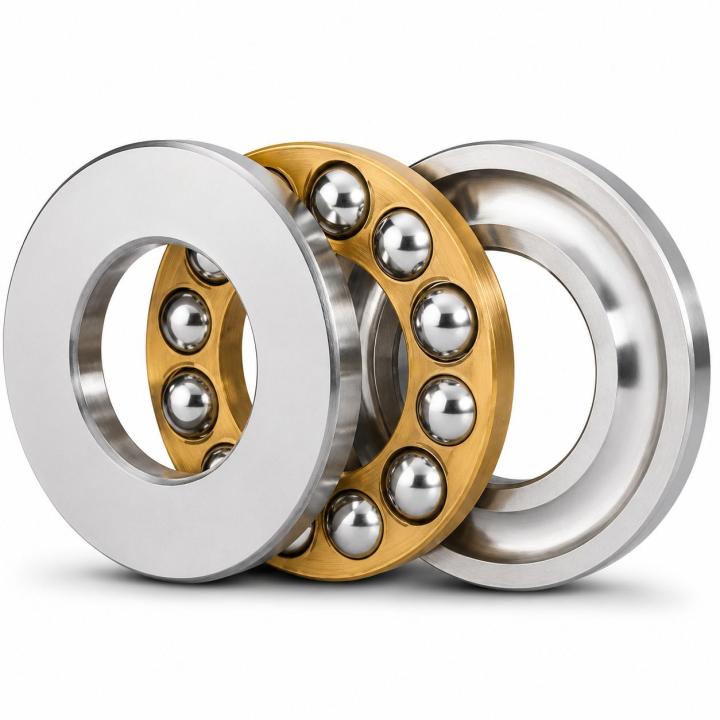
Thrust Ball Bearings
Thrust Ball Bearings
categories
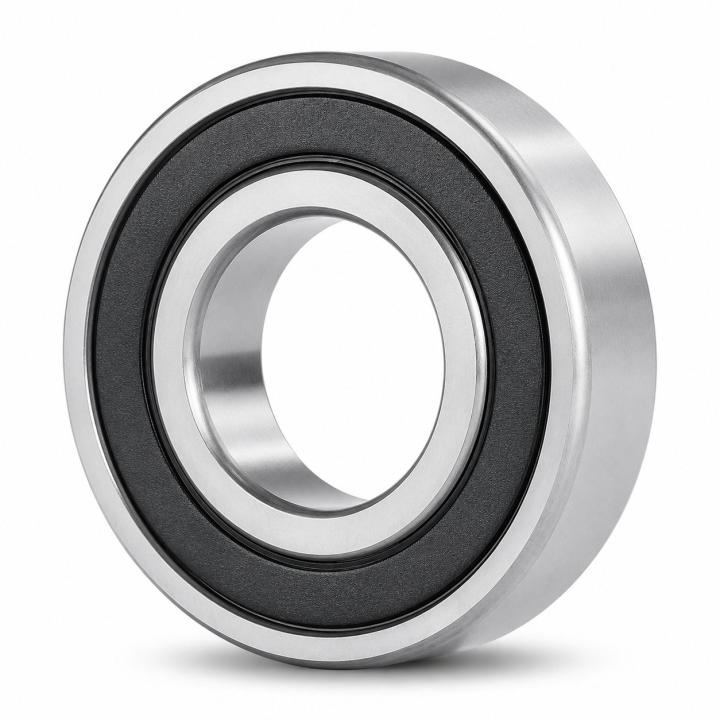
Deep Groove Ball Bearings
235 Items
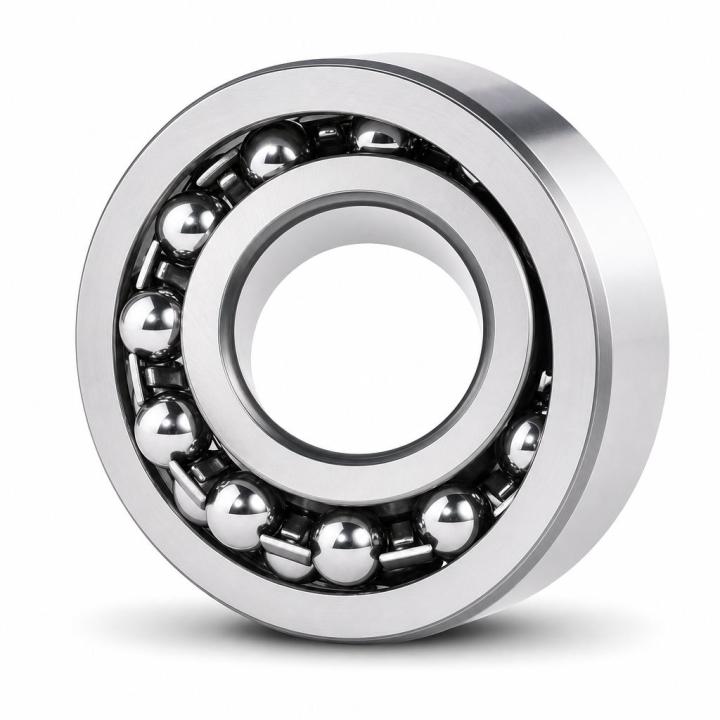
Self Aligning Ball Bearings
66 Items
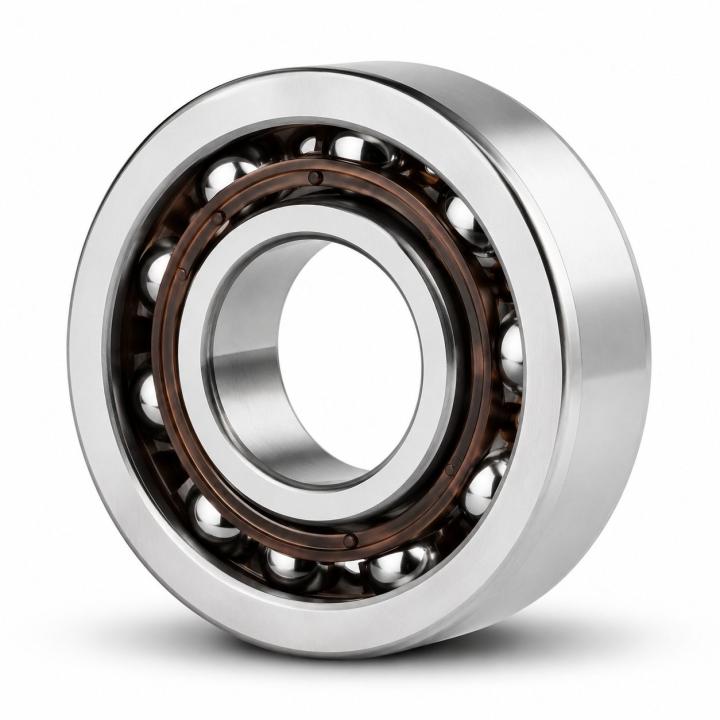
Angular Contact Ball Bearing
92 Items
Thrust Ball Bearings
102 Items
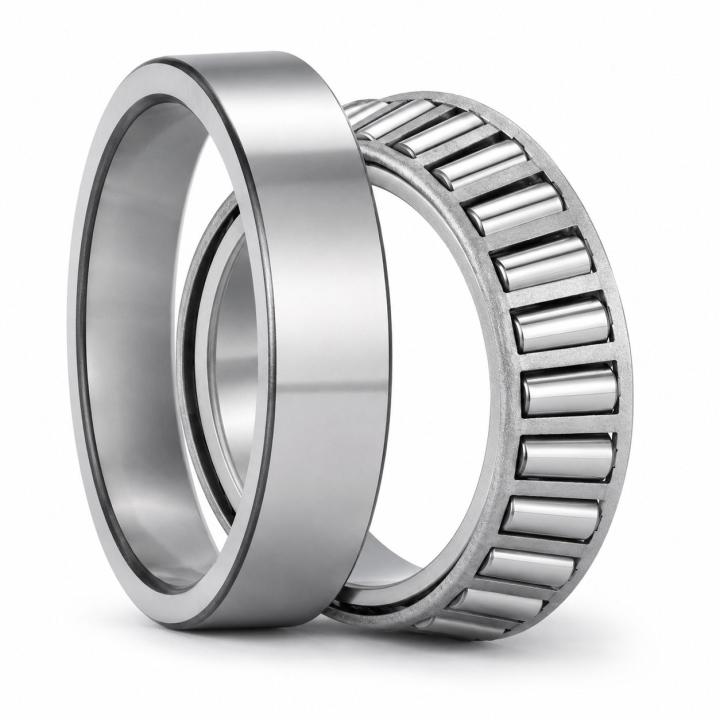
Tapered Roller Bearing
302 Items
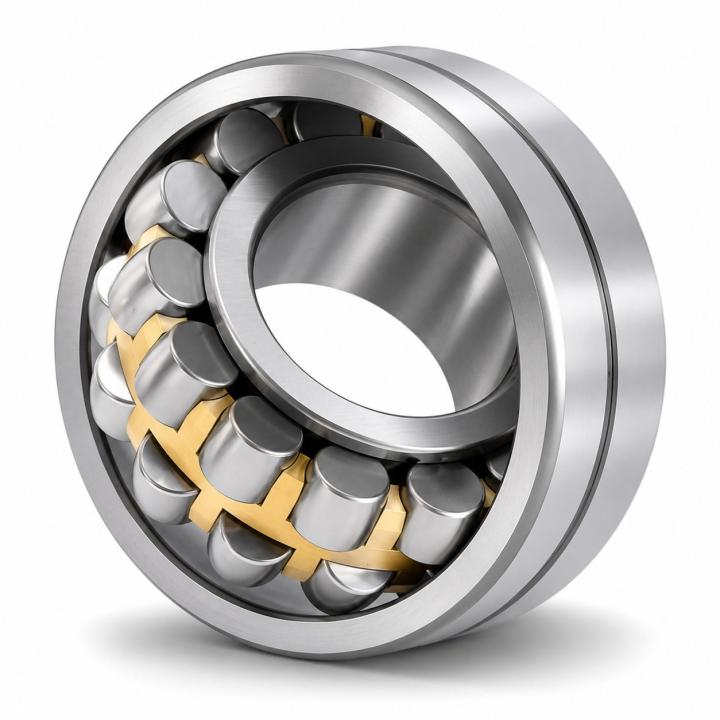
Spherical Roller Bearing
232 Items
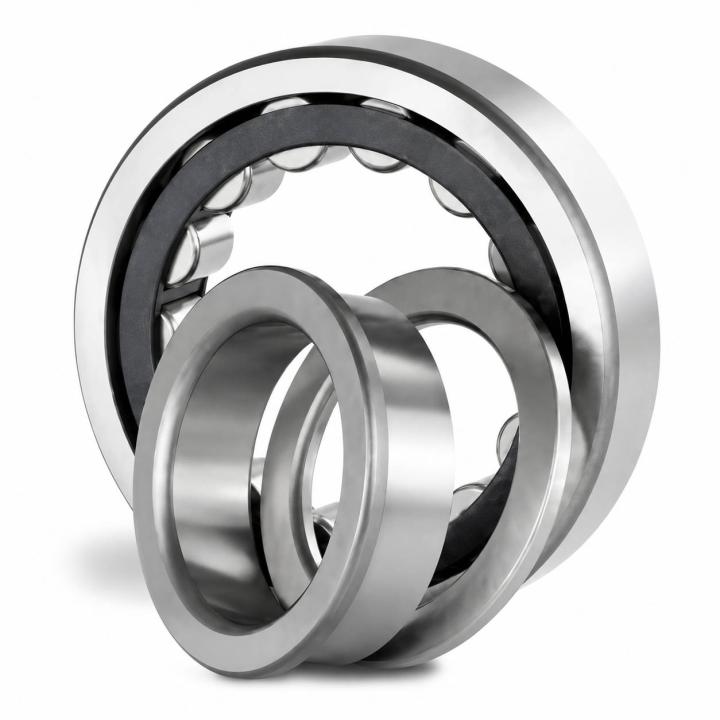
Cylindrical Roller Bearings
2 Items
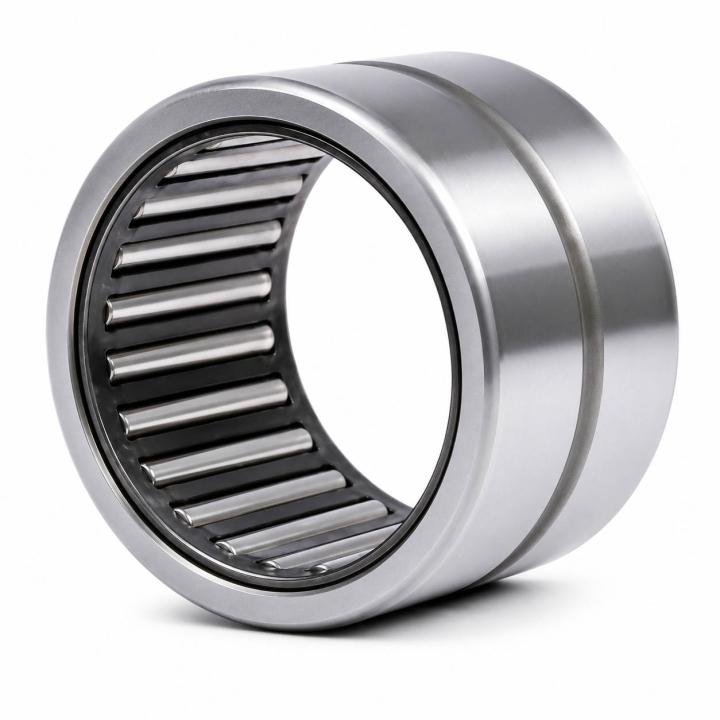
Needle Roller Bearing
16 Items
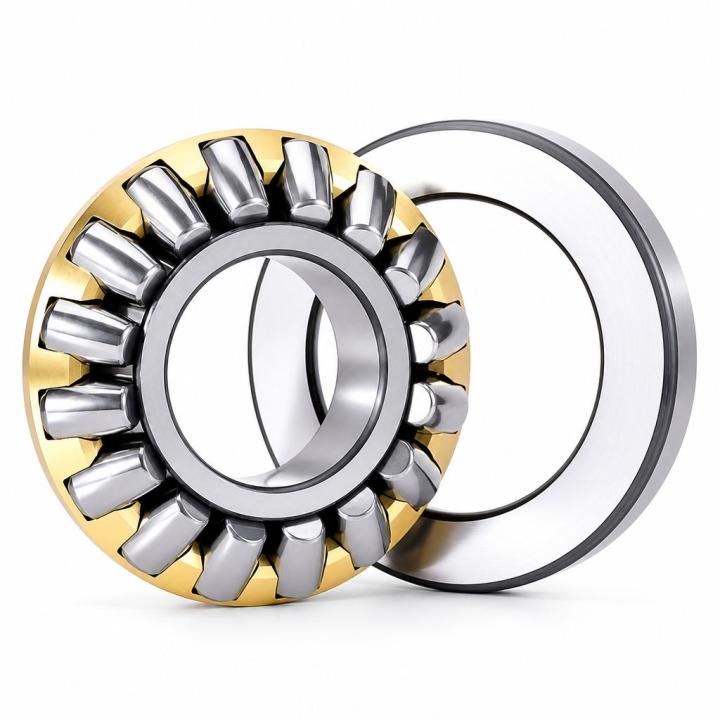
Spherical Roller Thrust Bearings
17 Items
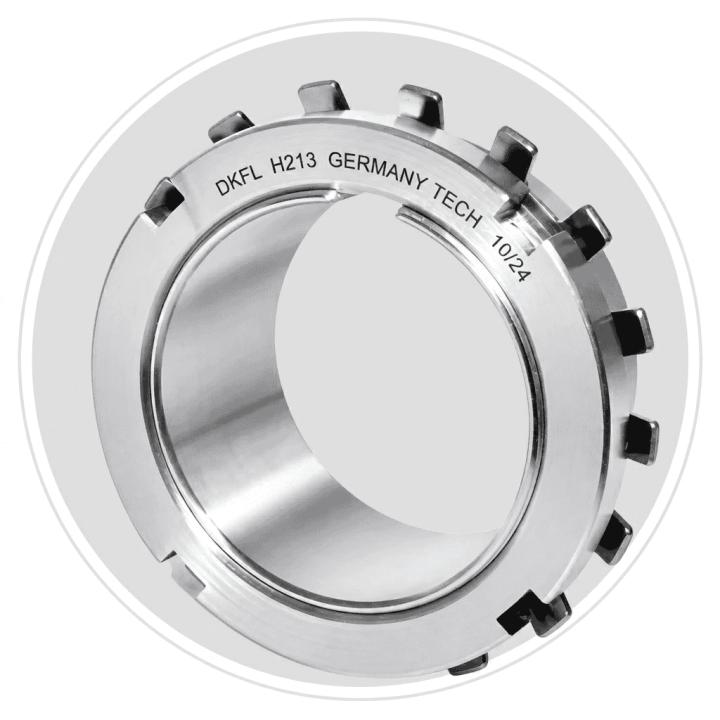
Adapter Sleeves
49 Items
Engineering Guide to Thrust Ball Bearings: Kinematics, Configurations & Minimum Load Criteria
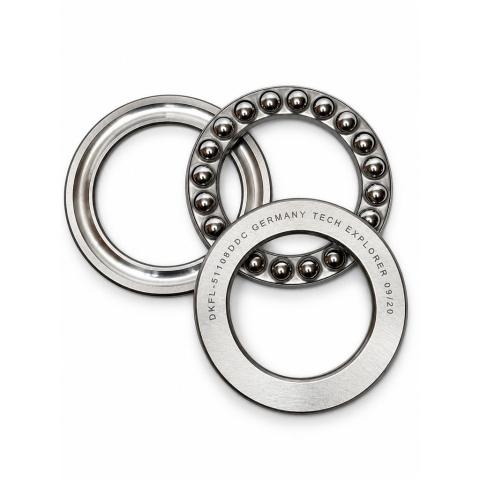
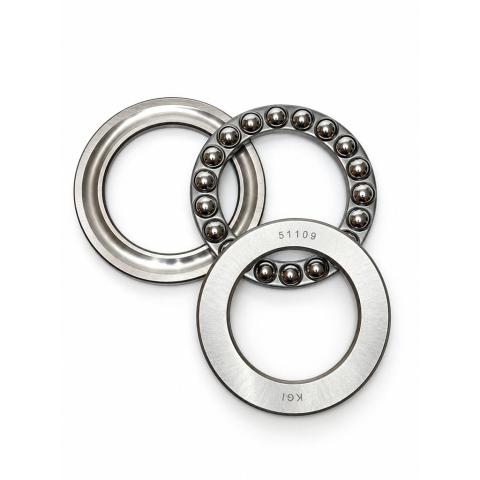
Thrust Ball Bearings are engineered exclusively to support pure axial (thrust) loads parallel to the axis of rotation. Composed of precision-ground raceway washers and high-grade ball complement cages, these assemblies operate with a 90° contact angle relative to the shaft centerline. While offering exceptional axial rigidity and high positioning accuracy at moderate speeds, they are kinematically incapable of carrying radial loads.
Engineered and verified by Kamyar Gostar Iranian Industrial Group (DKFL), this technical overview covers separable component architecture, single vs. double direction variants, spherical seating options, and minimum load calculation requirements.
1. Separable Component Architecture
A major operational advantage of thrust ball bearings is their fully separable modular design, which facilitates independent installation, alignment, and routine maintenance:
- Shaft Washer: Ground with a tight bore tolerance for an interference fit with the shaft, rotating synchronously with the driving shaft.
- Housing Washer: Features a slightly larger bore diameter clearance and precision outside ground diameter to seat firmly in the housing without rubbing against the rotating shaft.
- Ball & Cage Assembly: Securely spaces and guides precision grade steel balls inside stamped steel or solid machined brass (suffix M/MP) pockets for optimal load distribution.
2. Design Configurations & Series
| Configuration Type | ISO Standard Series | Thrust Load Capacity | Misalignment Accommodation |
|---|---|---|---|
| Single Direction (Flat Washer) | 511XX, 512XX, 513XX, 514XX | Unidirectional only | None (demands strict perpendicularity) |
| Single Direction (Spherical Seat) | 532XX, 533XX, 534XX (+ U-washer) | Unidirectional only | Compensates initial housing machining errors |
| Double Direction (Flat Washer) | 522XX, 523XX, 524XX | Bidirectional (Both Directions) | None (rigid mounting required) |
| Double Direction (Spherical Seat) | 542XX, 543XX, 544XX (+ U-washers) | Bidirectional (Both Directions) | Self-aligning for initial misalignment |
3. Minimum Axial Load Requirement ($F_{a\,min}$)
At elevated rotational speeds, centrifugal forces and gyroscopic moments tend to force the balls outward and induce damaging sliding friction (skidding) against the raceways. To ensure full rolling kinematic contact at all times, a minimum axial load ($F_{a\,min}$) must be applied:
Where $A$ is the minimum thrust load factor and $n$ is the operating speed in RPM. When gravity or external mechanical loads are inadequate to satisfy this equation, spring preloading (using coil or Belleville disc springs) must be incorporated into the design.
4. DKFL Metallurgy & Industrial Implementations
All DKFL Thrust Ball Bearings are precision-manufactured from high-purity, vacuum-degassed GCr15 / 100Cr6 bearing steel, through-hardened to $60-64\text{ HRC}$. Raceways undergo an ultra-fine superfinishing process to achieve sub-micron surface roughness ($R_a$), preserving the elastohydrodynamic lubricant film and minimizing wear.
Primary Industrial Applications: Crane hooks, heavy-duty industrial jacks, rotary turntables, precision CNC workheads, high-pressure line valves, and low-speed centrifugal separators.