

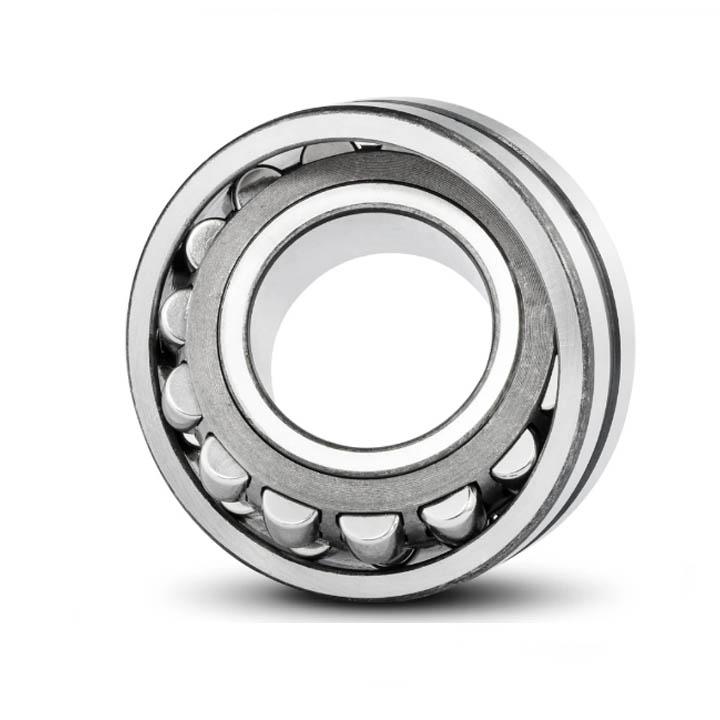

KGU 22209 CCKW33 Spherical Roller Bearing
The KGU 22209 CCKW33 Spherical Roller Bearing is engineered precisely to prevent this nightmare. Instead of tiny round balls, it houses robust, barrel-shaped steel rollers that travel inside a spherical, curved outer ring. When your shaft bends, flexes, or wobbles under heavy operational cycles, the internal rollers pivot smoothly within the raceway without binding. It self-aligns dynamically while spinning, distributing hundreds of kilograms of pressure evenly across the contact area. Choosing a quality component like KGU's 22209 CCKW33 translates to fewer breakdown emergencies, longer service intervals, and noticeably lower maintenance overhead.
10022080113
Request a quote
Product Detail
Spherical Roller Bearing 22209 CCKW33 Brand: KGU | Engineered for Heavy Radial Loads, Shock Vibration, and Shaft Deflection
This guide provides a comprehensive, practical, and plain-English breakdown of the KGU 22209 CCKW33 bearing for procurement managers, plant technicians, and equipment operators. To verify exact tolerances, internal clearance classes (such as Normal or C3), dynamic load ratings, and catalog weight, always consult the official manufacturer datasheet or your verified supplier.
Plain-Language Introduction: What Makes the KGU 22209 CCKW33 Crucial?
In any active manufacturing plant, processing facility, or workshop, industrial machinery works under demanding continuous conditions. Driven shafts inside belt conveyors, heavy industrial blowers, slurry pumps, gear reducers, hammer mills, and vibrating screens rarely rotate in pristine, mathematically perfect laboratory conditions. As tonnages surge or machines vibrate, drive shafts inevitably flex, deflect, and bend slightly under strain. Furthermore, thermal expansion from long operational shifts causes metal to expand, while subtle foundation settling introduces angular misalignment between bearing housings.
If a machine relies on a rigid, standard single-row ball bearing in these punishing spots, problems escalate fast. Standard bearings cannot accommodate angular tilting. When a shaft flexes even a fraction of a degree, all load concentrates violently on the outer edge of the balls and raceways. The immediate consequences are pinpoint stress concentrations, scorching frictional heat, rapid lubricant breakdown, loud grinding noise, and abrupt mechanical breakdown that halts your entire production line.
The KGU 22209 CCKW33 Spherical Roller Bearing is engineered precisely to prevent this nightmare. Instead of tiny round balls, it houses robust, barrel-shaped steel rollers that travel inside a spherical, curved outer ring. When your shaft bends, flexes, or wobbles under heavy operational cycles, the internal rollers pivot smoothly within the raceway without binding. It self-aligns dynamically while spinning, distributing hundreds of kilograms of pressure evenly across the contact area. Choosing a quality component like KGU's 22209 CCKW33 translates to fewer breakdown emergencies, longer service intervals, and noticeably lower maintenance overhead.
How Does a Spherical Roller Bearing Work in Simple Terms?
Think of a spherical roller bearing as an intelligent suspension system for a rotating shaft. In a conventional ball bearing, contact between each ball and the steel ring is just a pinpoint dot. In a spherical roller bearing, the rolling elements are wide barrel-shaped rollers that make broad, line contact across the steel raceway.
Because the contact zone is a broad line rather than a tiny point, the bearing can absorb tremendous downward and radial weight without gouging the raceways. Additionally, having two parallel rows of barrel rollers oriented at subtle opposing angles equips the bearing to handle complex combined forces—managing both straight downward weight (radial load) and sideways thrust forces (axial load) simultaneously.
Core Benefits at a Glance:
- Massive Weight Handling: Broad roller contact spreads tons of vertical force evenly across hardened steel rings.
- Dynamic Self-Alignment: The internal components freely pivot to compensate for shaft flexure and housing misalignment without stressing roller edges.
- Shock and Vibration Resilience: Dampens harsh impacts in turbulent machines such as stone crushers, vibrating screens, and pulping mills.
- Dual-Direction Thrust Resistance: The angled double-row setup restrains shaft float and side-to-side axial movements under operational load spikes.
- Cooler, Quieter Running: Minimized edge pinching reduces operating temperatures, preserving lubricant life and lowering power consumption.
Decoding the Part Code: What Does 22209 CCKW33 Mean?
Industrial bearing codes look like an intimidating jumble of numbers and letters, but every single character tells you something vital about how the bearing is built and how it must be installed. Knowing how to read this code guarantees you order the exact spare part needed without costly purchasing mistakes:
- 22209 (Series & Dimension Identifier): The prefix "222" identifies this as a standard double-row spherical roller bearing series renowned worldwide for high radial capacity and balanced envelope dimensions. The suffix digits "09" indicate the basic bore size classification (standard 45 mm nominal bore in metric sizing).
- CC (Optimized Internal Geometry & Cage Design): In modern bearing manufacturing, "CC" typically denotes a flangeless inner ring design paired with symmetrical barrel rollers, a floating guide ring, and two precision-stamped steel window cages. This configuration reduces friction, promotes free roller rotation, and helps the bearing run cooler under heavy continuous duty.
- K (Tapered Bore 1:12): The internal mounting hole is not straight or cylindrical; it is manufactured with a 1:12 conical taper. This means the bearing is specifically designed to be mounted on a matching tapered shaft journal or, far more commonly, secured onto a straight commercial transmission shaft using an adapter sleeve.
- W33 (Peripheral Lubrication Feature): Denotes an annular lubrication groove machined into the outer circumference of the outer ring, complete with three evenly spaced oil or grease supply holes. This allows maintenance crews to inject fresh grease straight into the core of the rolling elements without disassembling the housing or bearing assembly.
Essential Pre-Purchase Dimensional & Application Checklist
To protect your investment and avoid machinery downtime, always verify the following essential parameters against your machine blueprint or worn component before placing an order. Because different manufacturers may have minor variations across specific catalog revisions, cross-checking physical dimensions is the best safety step:
Why the "K" (Tapered Bore) is Loved by Maintenance Crews
Bearings with cylindrical (straight) bores require strict, expensive machining tolerances on the drive shaft. To achieve a tight interference fit, technicians often have to heat the bearing using an induction heater or press it on with heavy hydraulic rams. If the shaft has minor surface imperfections, pressing can score the metal, and when the bearing eventually wears out, pulling it off can turn into a grueling task that ruins the shaft.
The tapered bore (K) design completely solves this challenge when combined with a standard adapter sleeve (such as the H 309 series):
- Fits Commercial Smooth Shafts: You do not need stepped or threaded shafts. A slit adapter sleeve slides over standard commercial smooth cold-drawn shafting (typically a 40 mm shaft for an H 309 sleeve on a 22209K bearing).
- Adjustable Grip & Clearance: As you tighten the sleeve's spanner lock nut, the bearing is gently driven up the tapered wedge. This expands the inner ring slightly and clamps the assembly solidly onto the shaft with uniform, 360-degree frictional grip.
- Zero Shaft Damage: Because the sleeve acts as a sacrificial barrier, the bearing never rubs directly against your expensive machine shaft.
- Fast, Painless Removal: When overhaul time arrives, simply bend back the locking washer tab, loosen the spanner nut a couple of turns, tap with a drift or sleeve-removal tool, and the bearing releases cleanly in minutes without cutting torches or destructive pullers.
Where is the KGU 22209 CCKW33 Commonly Used?
Because the 22209 CCKW33 balances compact overall dimensions with exceptional load-carrying ability and self-alignment, it is found across a wide variety of industrial machinery sectors:
- Bulk Material Handling & Conveyors: Mounted in head, tail, or snub pulley pillow blocks across cement plants, gravel quarries, agricultural grain terminals, and port conveyor systems.
- Industrial Blowers & Heavy Exhaust Fans: Air handling units operating at sustained speeds where airflow dynamics and belt pull create significant radial forces and vibrations.
- Industrial Gear Drives & Reducers: Intermediate shafts where helical gearing creates combined radial load and reversing axial thrust.
- Mining, Crushing & Screening Equipment: Vibratory screens, feeder tables, and secondary sizing crushers that operate under continuous cyclical shocks and heavy airborne grit.
- Agricultural Harvesters & Forestry Processing: Timber debarkers, chippers, flail shredders, and balers that require durable components capable of withstanding rough outdoor environments.
- Pulp, Paper & Textile Rollers: Calendar rolls, dryer felt rollers, and guide cylinders where precise tracking must be maintained despite frame flex.
Lubrication & Preventive Maintenance: Ensuring Maximum Lifespan
More than 60% of premature bearing failures across industry are caused by improper lubrication—either using the wrong grease chemistry, running dry, letting dirt and moisture bypass seals, or paradoxically, pumping in way too much grease. The KGU 22209 CCKW33 makes proper lubrication straightforward thanks to its W33 peripheral feature, but observing key field practices makes all the difference:
- Select High-Quality EP Industrial Grease: For general industrial duty, use a high-quality mineral-oil-based grease thickened with lithium complex soap featuring Extreme Pressure (EP) additives and an NLGI 2 consistency. For high-heat or extreme vibration applications, consult an engineering lubricant specialist.
- Avoid Over-Greasing: Filling a bearing housing completely full of grease is a frequent rookie mistake. When excess grease is packed tight, the churning rollers have no room to move freely, generating severe fluid friction. This causes internal temperatures to skyrocket, quickly baking and oxidizing the grease. As a standard rule of thumb, fill the bearing 100% full, but fill the surrounding housing cavity only 30% to 50% full.
- Keep Grease Fittings & Guns Spotless: Always wipe down the grease nipple on your housing with a clean rag before attaching the grease gun nozzle. Pumping a single grain of sand or grinding grit into the W33 lubrication port can permanently scratch the polished raceways.
- Inspect Seals Regularly: Even the best bearing cannot survive if dust, slurry, or washdown water enters the housing. Keep felt, labyrinth, or nitrile lip seals in good condition, and refresh them whenever replacing the bearing.
- Monitor Operating Temperature and Noise: A healthy spherical roller bearing should hum smoothly. If a newly installed bearing runs excessively hot (exceeding 80°C to 90°C) or emits a high-pitched metallic whine, shut down immediately and inspect for over-tightening or dry running.
Step-by-Step Installation Guide (Practical & Field-Tested)
Installing a tapered-bore spherical roller bearing requires care, clean habits, and attention to internal clearance. Follow these simple steps for a smooth, fault-free installation:
Step 1: Thorough Cleaning and Shaft Preparation
Wipe down the shaft seat, housing bore, and adapter sleeve using clean lint-free cloths and solvent. Remove any burrs, rust spots, or gouges on the shaft with a fine oilstone or emery cloth. Inspect the shaft diameter with a micrometer to verify it is within normal tolerance.
Step 2: Unbox in a Clean Environment
Do not open the protective plastic wrapping of your KGU 22209 CCKW33 bearing until the moment you are ready to mount it. The factory-applied preservative oil does not need to be washed out unless you are using a specialized synthetic grease incompatible with petroleum-based rust inhibitors.
Step 3: Position the Adapter Sleeve & Bearing
Slide the adapter sleeve onto the shaft with its threaded end facing outwards. Apply a thin film of clean light oil to the outer taper of the sleeve to facilitate smooth mounting (keep the inner sleeve bore contacting the shaft clean and oil-free to prevent shaft slipping). Slide the bearing up onto the tapered sleeve, followed by the MB lock washer and KM lock nut (chamfered face inward).
Step 4: Drive-Up and Clearance Verification
Tighten the lock nut using a proper hook spanner wrench. As the nut turns, the bearing drives up the taper, causing the inner ring to expand and reducing internal radial clearance. You must leave adequate residual clearance: the rollers must still rotate freely by hand, and you should be able to slide a thin feeler gauge blade between the top unloaded rollers and the outer raceway. Never overtighten until the bearing is wedged tight—this causes immediate overheating!
Step 5: Lock the Nut Securely
Once the correct internal clearance is achieved and the bearing turns smoothly, align one of the outer tabs of the lock washer with a slot on the lock nut. Use a brass punch to bend the tab firmly into the nut slot. This ensures vibration will never cause the nut to back off during machine operation.
Step 6: Housing Fit and Final Inspection
Place the assembly into your clean pillow block housing. Ensure the outer ring sits squarely and that any locating rings are positioned correctly for fixed or floating arrangements. Bolt down the housing caps to the specified torque and rotate the shaft by hand to confirm silent, completely binding-free movement before powering on.
Smart Purchasing Advice: Avoid Costly Sourcing Mistakes
In the industrial bearing marketplace, many part numbers look nearly identical, but a one-letter difference can leave you with a part that cannot be installed on your equipment. Keep these tips in mind when placing your purchase order:
- Confirm the "K" Suffix: If your machine uses an adapter sleeve, you must order the 22209 CCK (tapered bore). If your shaft has a ground cylindrical shoulder without a sleeve, you require the straight-bore 22209 CC without the "K".
- Order the Matching Adapter Sleeve Kit: A 22209 CCKW33 bearing is almost always paired with an H 309 adapter sleeve, an MB 09 locking washer, and a KM 09 lock nut. Ordering them together prevents maintenance delays.
- Insist on Authentic KGU Packaging: Reliable performance depends on genuine bearing-grade steel, uniform case-hardening, and high-precision ground raceways. Verify that the product arrives in pristine, factory-sealed KGU packaging with crisp markings.
- Check Internal Clearance Requirements: While normal clearance (CN) works for standard speeds and ambient conditions, applications exposed to external heat conduction or very tight press fits may require a C3 clearance version. Inform your supplier about your ambient operating temperature.
Frequently Asked Questions (FAQ)
1. What is the fundamental difference between 22209 CC/W33 and 22209 CCKW33?
The only structural difference is the inner bore geometry. The standard 22209 CC/W33 has a straight, cylindrical 45 mm bore intended for direct press-fitting onto a stepped shaft. The 22209 CCKW33 features a 1:12 conical tapered bore designed for mounting with an adapter sleeve onto a straight shaft.
2. Which adapter sleeve fits the 22209 CCKW33?
This bearing typically matches an H 309 adapter sleeve. The sleeve has a 45 mm tapered outer surface to seat inside the bearing bore, and a 40 mm straight inner diameter designed to clamp onto a standard 40 mm transmission shaft.
3. Can this bearing accommodate axial (side-to-side) thrust forces?
Yes. Thanks to its two rows of barrel-shaped rollers set at opposite contact angles, the spherical roller bearing handles substantial axial thrust forces in both directions alongside high radial loads.
4. Why is my new bearing running hot after initial startup?
The two most common culprits are grease overfilling and overtightening the adapter sleeve nut. If the housing cavity is stuffed 100% full of grease, churning causes temperature spikes that usually subside after grease settles. If the nut was driven too far, zero internal clearance remains, creating severe preload friction.
5. What housing styles accommodate the 22209 CCKW33?
When mounted with an H 309 sleeve on a 40 mm shaft, the bearing is most commonly housed in standard split plummer block / pillow block housings such as the SN 509 (or modern SNL 509 series).
Source Authentic KGU 22209 CCKW33 Bearings from KGICO
Keep your production lines running smoothly with dependable, industrial-grade spherical roller bearings. Contact our experienced technical sales team for competitive wholesale pricing, bulk inventory availability, and comprehensive engineering support.
Visit KGICO.co to Request an Instant QuotePro Tip: Need help verifying shaft compatibility or housing matches? Share your machine model or a photo of your existing assembly with our technical team for immediate assistance.